
Supporting Airway Management Providers in Emergencies

Evidence-based training for providers caring for critically ill patients in need of emergency airway management.
AIME for Airway Management Success

For more than twenty five years, Airway Interventions and Management in Emergencies (AIME) programs have supported clinicians worldwide augmenting their skills and confidence to manage critically ill patients in need of emergency airway management.

Created for physicians and other advanced providers working in acute care settings, AIME delivers practical, hands-on learning that reflects real-world challenges. Guided by expert educators who combine clinical excellence with engaging teaching, you’ll gain strategies that apply whether you work in a busy urban hospital or a remote community setting.

AIME Clinical Cadaver
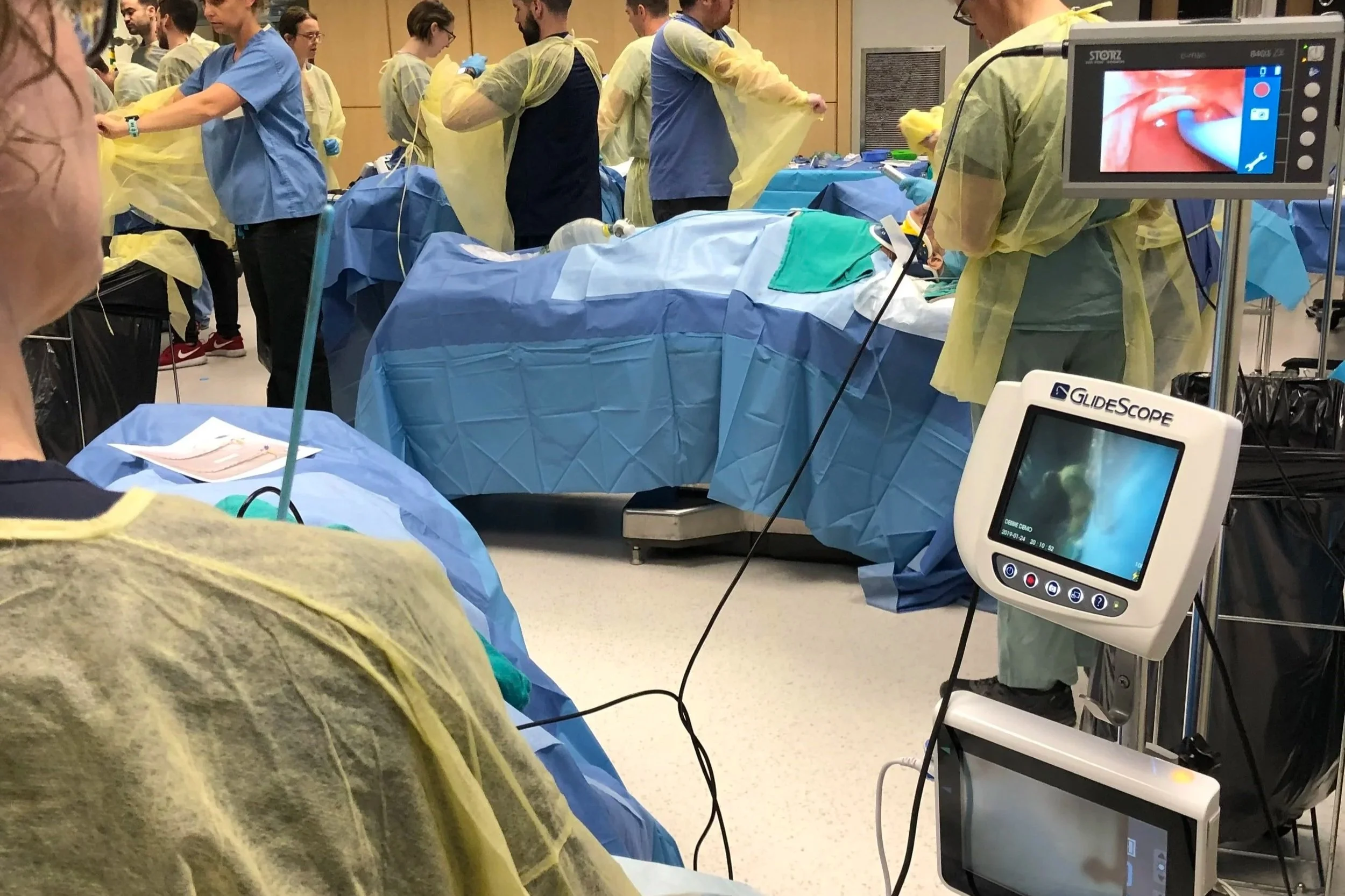
  • A Hands-on, Advanced Airway Learning Experience Using Clinical Cadavers

    A procedure focused program offering unique repetitive practice opportunities that reinforce core and advanced airway skills using a variety of currently available and increasingly accessible airway devices. Attendees will learn not only from experienced airway educators that understand the varied practice environments clinician’s face but also from the greatest teachers of all, specially prepared clinical cadavers producing unparalleled high fidelity skills learning opprtunities.

AIME Awake
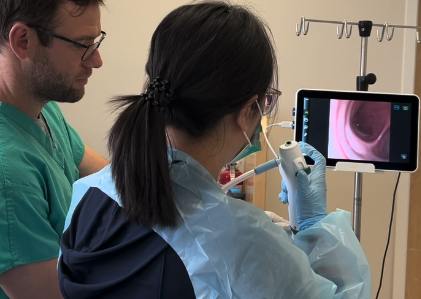
  • Making awake tracheal intubation a real option for managing the anticipated difficult airway in patient’s requiring emergency airway management

    Guidelines for airway management in patients with an anticipated difficult airway universally include the option of performing an ‘awake’ tracheal intubation (ATI). Performing a rapid sequence intubation (RSI) using video laryngoscopy has become a standard approach to facilitate tracheal intubation for airway management in emergencies, whereas experience in performing ATI is limited. Awake tracheal intubation however remains a necessary alternative to RSI in not only anticipated anatomically difficult airway cases, but also for selected physiologically compromised apnea intolerant patients. This program provides attendees with with an approach and the skills necessary to safely perform ATI when indicated. Instructors from Emergency Medicine and Anesthesiology along with specially prepared clinical cadavers provide an unparalleled unique high fidelity skills learning experience.

AIME On-the-Road
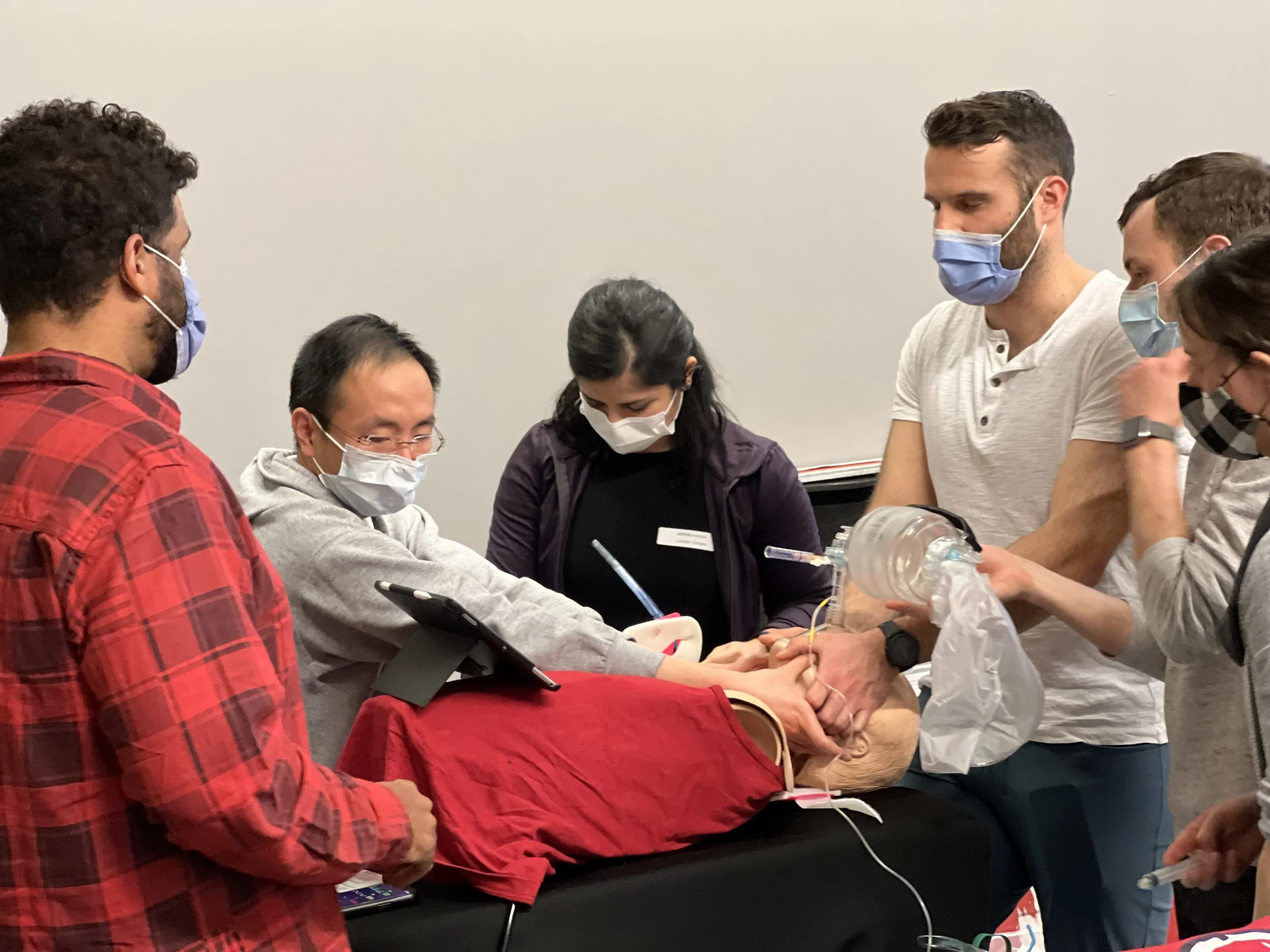
  • A Hands-on, Case-Based Practical Airway Learning Experience

    For over 25 years AIME On-the-Road has been providing high value educational support for clinicians in Canada and other regions around the world who are responsible for airway management in emergencies. Management of both the anticipated and unanticpated difficult airway requires evidence-based decision making and skillful procedural execution customized the patient’s presentation and the providers clinical environment. This program uses case-based group discussion with hands-on workshops using commonly available/increasingly accessible airway devices with the goal of enhancing provider confidence and skills that ultimately improve patient outcomes.

Tracheal tubes don’t save lives. Good provider, team decision-making & skill execution does.

Featured Airway Literature

  • Law, J.A., Kovacs, G. Videolaryngoscopy 2.0. Can J Anesth/J Can Anesth (2021).

    Videolaryngoscopy (VL) is great. For many reasons, it helps alleviate much of the stress associated with airway management. It’s probably fair to say that, were there enough to go around (perhaps, if money was no object), we’d all like to use VL to facilitate every tracheal intubation. Indeed, published airway recommendations are beginning to suggest exactly this, resources allowing.1 This follows from the many studies and meta-analyses indicating that, compared with direct laryngoscopy (DL), VL is associated with increased tracheal intubation success and fewer complications. And many studies there are, with a PubMed search of the term “videolaryngoscopy” or “video laryngoscopy” currently yielding over 2900 results.

  • Driver BE, Semler MW, Self WH, et al. Effect of Use of a Bougie vs Endotracheal Tube With Stylet on Successful Intubation on the First Attempt Among Critically Ill Patients Undergoing Tracheal Intubation: A Randomized Clinical Trial.

    JAMA. Published online December 08, 2021. doi:10.1001/jama.2021.22002

    Importance: For critically ill adults undergoing emergency tracheal intubation, failure to intubate the trachea on the first attempt occurs in up to 20% of cases and is associated with severe hypoxemia and cardiac arrest. Whether using a tracheal tube introducer (“bougie”) increases the likelihood of successful intubation compared with using an endotracheal tube with stylet remains uncertain.
    Objective: To determine the effect of use of a bougie vs an endotracheal tube with stylet on successful intubation on the first attempt.


    Design, Setting, and Participants: The Bougie or Stylet in Patients Undergoing Intubation Emergently (BOUGIE) trial was a multicenter, randomized clinical trial among 1102 critically ill adults undergoing tracheal intubation in 7 emergency departments and 8 intensive care units in the US between April 29, 2019, and February 14, 2021; the date of final follow-up was March 14, 2021.


    Interventions Patients were randomly assigned to use of a bougie (n = 556) or use of an endotracheal tube with stylet (n = 546).


    Main Outcomes and Measures: The primary outcome was successful intubation on the first attempt. The secondary outcome was the incidence of severe hypoxemia, defined as a peripheral oxygen saturation less than 80%.


    Results: Among 1106 patients randomized, 1102 (99.6%) completed the trial and were included in the primary analysis (median age, 58 years; 41.0% women). Successful intubation on the first attempt occurred in 447 patients (80.4%) in the bougie group and 453 patients (83.0%) in the stylet group (absolute risk difference, −2.6 percentage points [95% CI, −7.3 to 2.2]; P = .27). A total of 58 patients (11.0%) in the bougie group experienced severe hypoxemia, compared with 46 patients (8.8%) in the stylet group (absolute risk difference, 2.2 percentage points [95% CI, −1.6 to 6.0]). Esophageal intubation occurred in 4 patients (0.7%) in the bougie group and 5 patients (0.9%) in the stylet group, pneumothorax was present after intubation in 14 patients (2.5%) in the bougie group and 15 patients (2.7%) in the stylet group, and injury to oral, glottic, or thoracic structures occurred in 0 patients in the bougie group and 3 patients (0.5%) in the stylet group.

    Conclusions and Relevance: Among critically ill adults undergoing tracheal intubation, use of a bougie did not significantly increase the incidence of successful intubation on the first attempt compared with use of an endotracheal tube with stylet.

    Trial Registration ClinicalTrials.gov Identifier: NCT03928925

  • Law JA, Duggan LV, Asselin M, Baker P, Crosby E, Downey A, Hung OR, Jones PM, Lemay F, Noppens R, Parotto M, Preston R, Sowers N, Sparrow K, Turkstra TP, Wong DT, Kovacs G; Canadian Airway Focus Group. Canadian Airway Focus Group updated consensus-based recommendations for management of the difficult airway: part 1. Difficult airway management encountered in an unconscious patient. Can J Anaesth. 2021 Sep;68(9):1373-1404.

    PURPOSE

    Since the last Canadian Airway Focus Group (CAFG) guidelines were published in 2013, the literature on airway management has expanded substantially. The CAFG therefore re-convened to examine this literature and update practice recommendations. This first of two articles addresses difficulty encountered with airway management in an unconscious patient.

    SOURCE

    Canadian Airway Focus Group members, including anesthesia, emergency medicine, and critical care physicians, were assigned topics to search. Searches were run in the Medline, EMBASE, Cochrane Central Register of Controlled Trials, and CINAHL databases. Results were presented to the group and discussed during video conferences every two weeks from April 2018 to July 2020. These CAFG recommendations are based on the best available published evidence. Where high-quality evidence was lacking, statements are based on group consensus.

    FINDINGS AND KEY RECOMMENDATIONS

    Most studies comparing video laryngoscopy (VL) with direct laryngoscopy indicate a higher first attempt and overall success rate with VL, and lower complication rates. Thus, resources allowing, the CAFG now recommends use of VL with appropriately selected blade type to facilitate all tracheal intubations. If a first attempt at tracheal intubation or supraglottic airway (SGA) placement is unsuccessful, further attempts can be made as long as patient ventilation and oxygenation is maintained. Nevertheless, total attempts should be limited (to three or fewer) before declaring failure and pausing to consider "exit strategy" options. For failed intubation, exit strategy options in the still-oxygenated patient include awakening (if feasible), temporizing with an SGA, a single further attempt at tracheal intubation using a different technique, or front-of-neck airway access (FONA). Failure of tracheal intubation, face-mask ventilation, and SGA ventilation together with current or imminent hypoxemia defines a "cannot ventilate, cannot oxygenate" emergency. Neuromuscular blockade should be confirmed or established, and a single final attempt at face-mask ventilation, SGA placement, or tracheal intubation with hyper-angulated blade VL can be made, if it had not already been attempted. If ventilation remains impossible, emergency FONA should occur without delay using a scalpel-bougie-tube technique (in the adult patient). The CAFG recommends all institutions designate an individual as "airway lead" to help institute difficult airway protocols, ensure adequate training and equipment, and help with airway-related quality reviews.

  • Law JA, Duggan LV, Asselin M, Baker P, Crosby E, Downey A, Hung OR, Kovacs G, Lemay F, Noppens R, Parotto M, Preston R, Sowers N, Sparrow K, Turkstra TP, Wong DT, Jones PM; Canadian Airway Focus Group. Canadian Airway Focus Group updated consensus-based recommendations for management of the difficult airway: part 2. Planning and implementing safe management of the patient with an anticipated difficult airway. Can J Anaesth. 2021 Sep;68(9):1405-1436.

    Purpose: Since the last Canadian Airway Focus Group (CAFG) guidelines were published in 2013, the published airway management literature has expanded substantially. The CAFG therefore re-convened to examine this literature and update practice recommendations. This second of two articles addresses airway evaluation, decision-making, and safe implementation of an airway management strategy when difficulty is anticipated.

    Source: Canadian Airway Focus Group members, including anesthesia, emergency medicine, and critical care physicians were assigned topics to search. Searches were run in the Medline, EMBASE, Cochrane Central Register of Controlled Trials, and CINAHL databases. Results were presented to the group and discussed during video conferences every two weeks from April 2018 to July 2020. These CAFG recommendations are based on the best available published evidence. Where high-quality evidence is lacking, statements are based on group consensus.

    Findings and key recommendations: Prior to airway management, a documented strategy should be formulated for every patient, based on airway evaluation. Bedside examination should seek predictors of difficulty with face-mask ventilation (FMV), tracheal intubation using video- or direct laryngoscopy (VL or DL), supraglottic airway use, as well as emergency front of neck airway access. Patient physiology and contextual issues should also be assessed. Predicted difficulty should prompt careful decision-making on how most safely to proceed with airway management. Awake tracheal intubation may provide an extra margin of safety when impossible VL or DL is predicted, when difficulty is predicted with more than one mode of airway management (e.g., tracheal intubation and FMV), or when predicted difficulty coincides with significant physiologic or contextual issues. If managing the patient after the induction of general anesthesia despite predicted difficulty, team briefing should include triggers for moving from one technique to the next, expert assistance should be sourced, and required equipment should be present. Unanticipated difficulty with airway management can always occur, so the airway manager should have a strategy for difficulty occurring in every patient, and the institution must make difficult airway equipment readily available. Tracheal extubation of the at-risk patient must also be carefully planned, including assessment of the patient's tolerance for withdrawal of airway support and whether re-intubation might be difficult.